Pacific Trips Admin
Internal admin panel for a Pakistani travel agency. Built to let the owner and team manage every piece of content on pacific-trips.com — from trip packages to blog posts to customer enquiries.
The problem
Pacific Trips had no way to update their public website without going through a developer. The owner and staff were emailing edits, which slowed down publishing and caused version drift. They needed a self-serve tool that let multiple team members manage content with different levels of access.
What I built
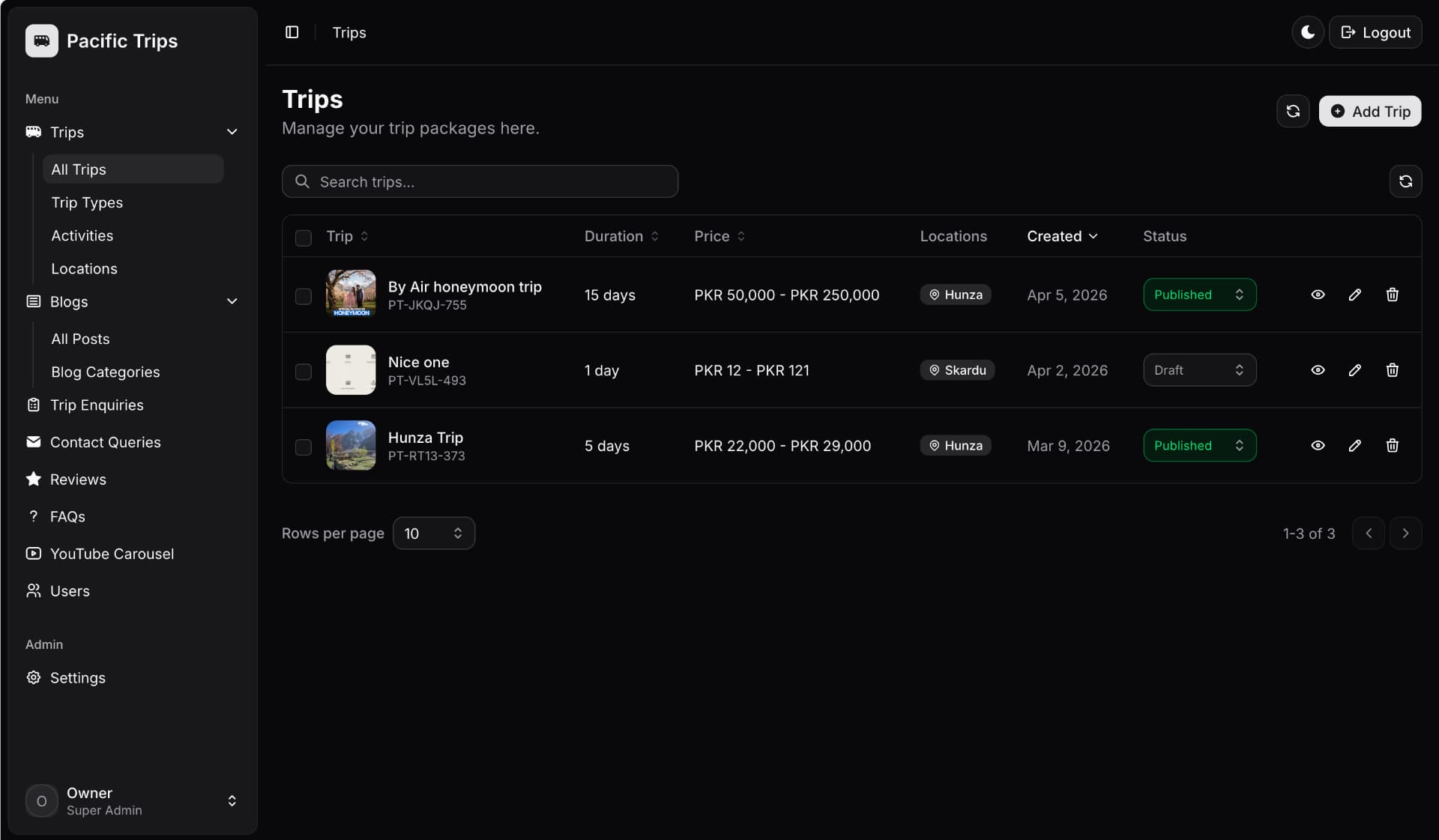
I built a full-stack admin dashboard on Next.js 16 and Supabase. It covers every content type on the public site and ships with a role-based permission system so the owner can control exactly what each team member can see or edit.
- Security layer
Supabase RLS at the database level, JWT sessions, Cloudflare Turnstile CAPTCHA on login, and CSP headers throughout.
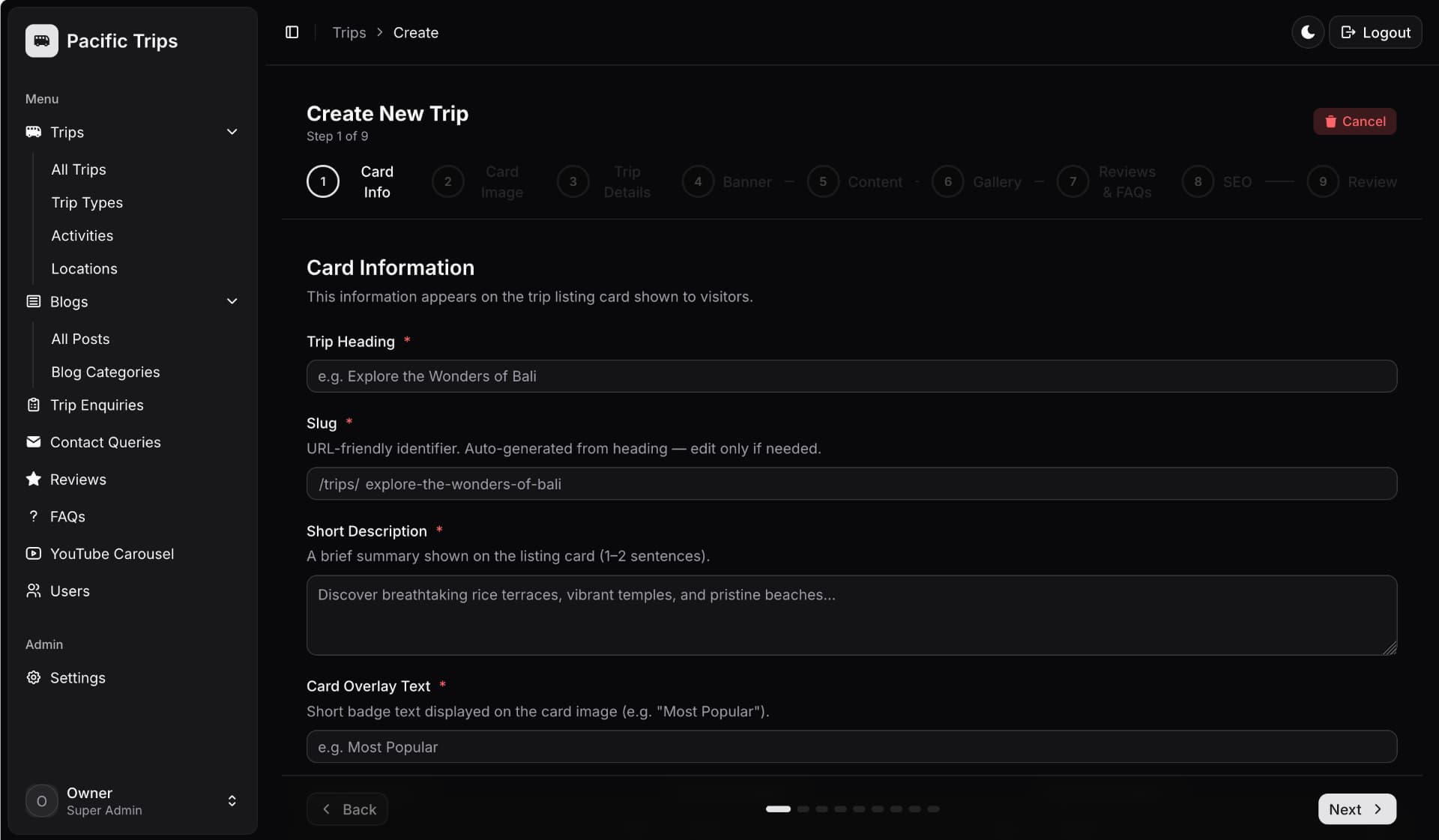
- 9-step trip wizard
Multi-step form for creating trip packages — card info, images, itinerary, gallery, FAQs, SEO metadata, and publish status, all validated per-step with Zod.
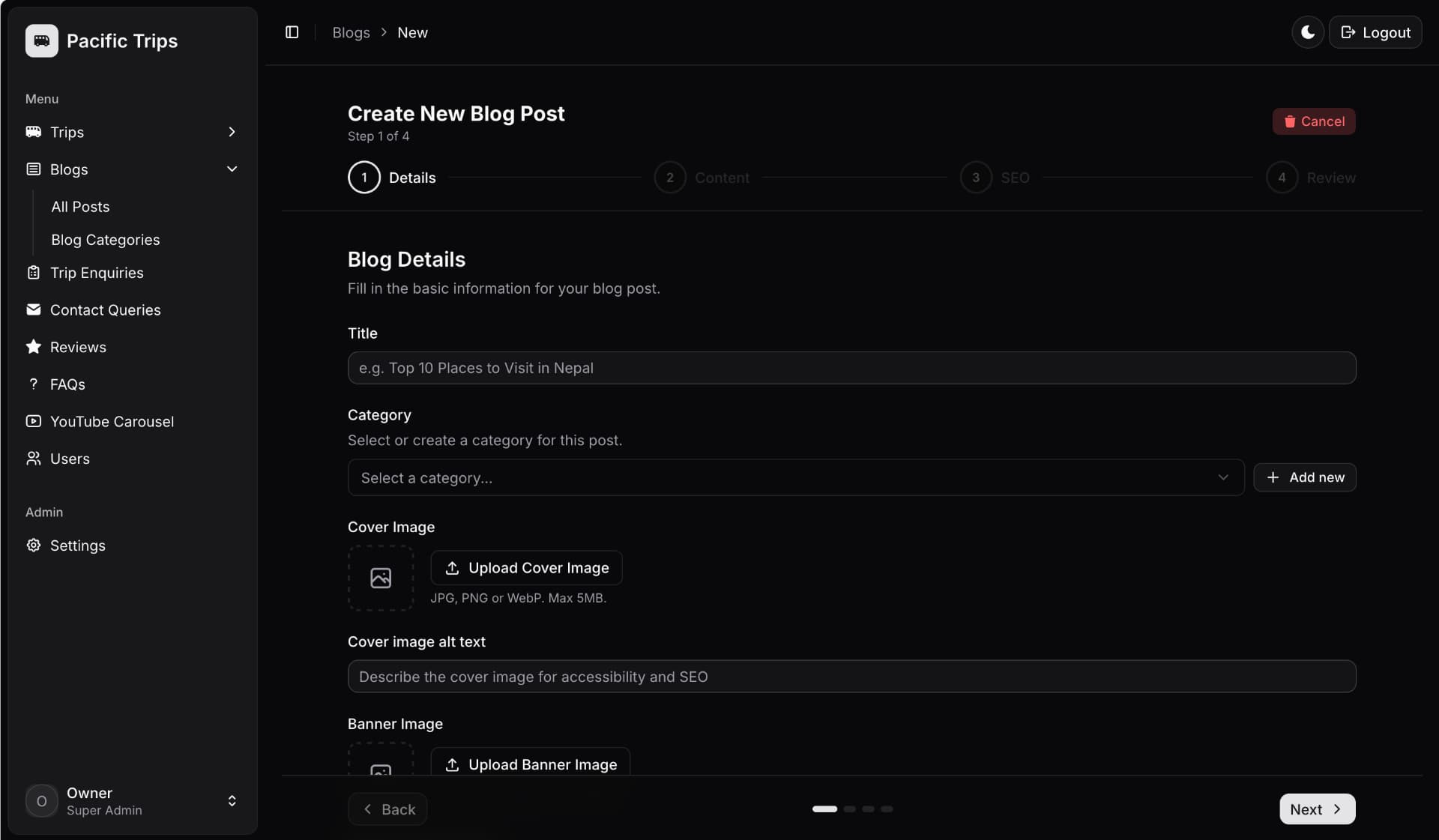
- Blog editor with inline images
Tiptap rich-text editor with markdown support, inline image uploads to Supabase Storage, and automatic orphaned-image cleanup on delete.
- Granular role based access system
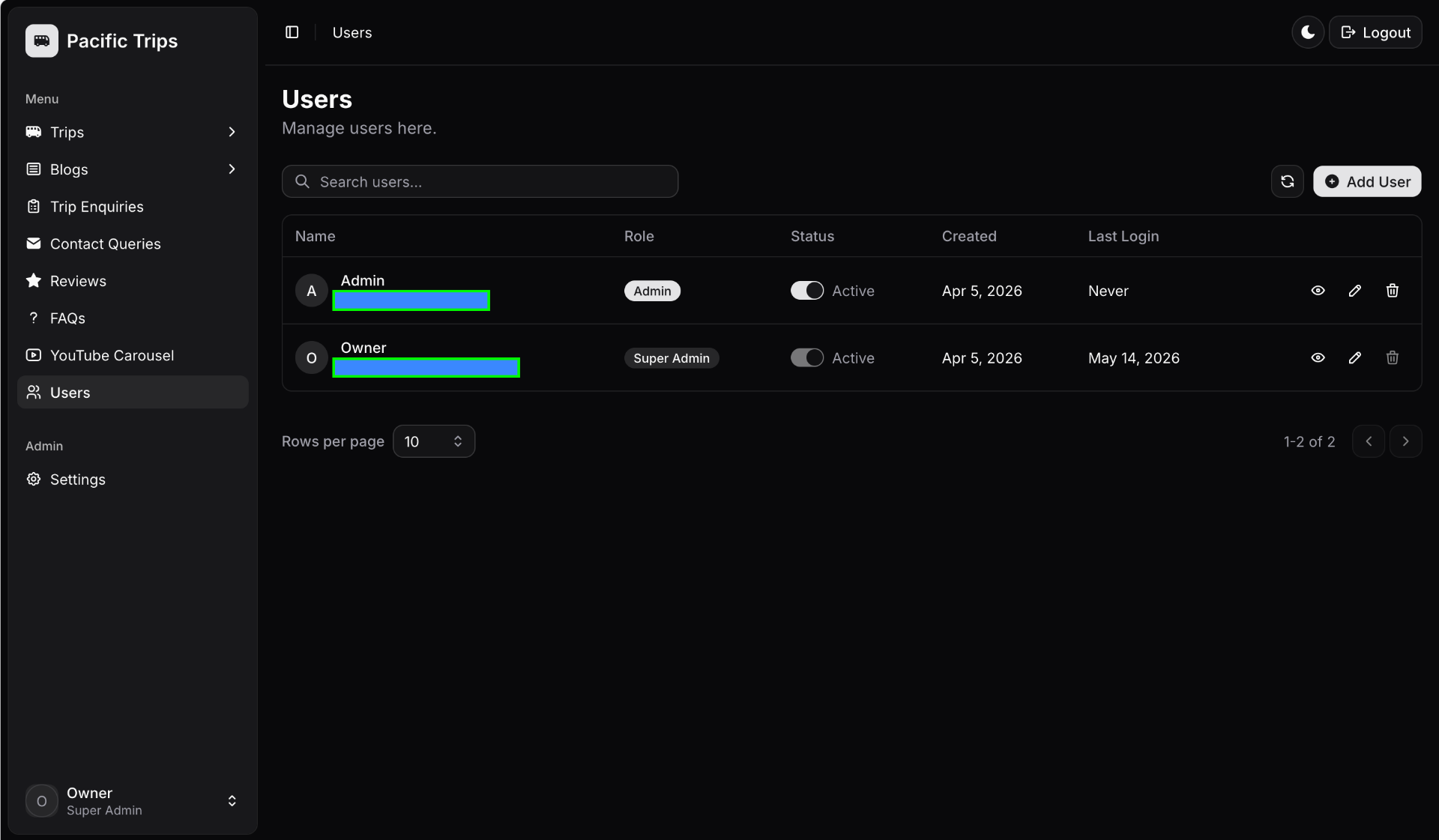
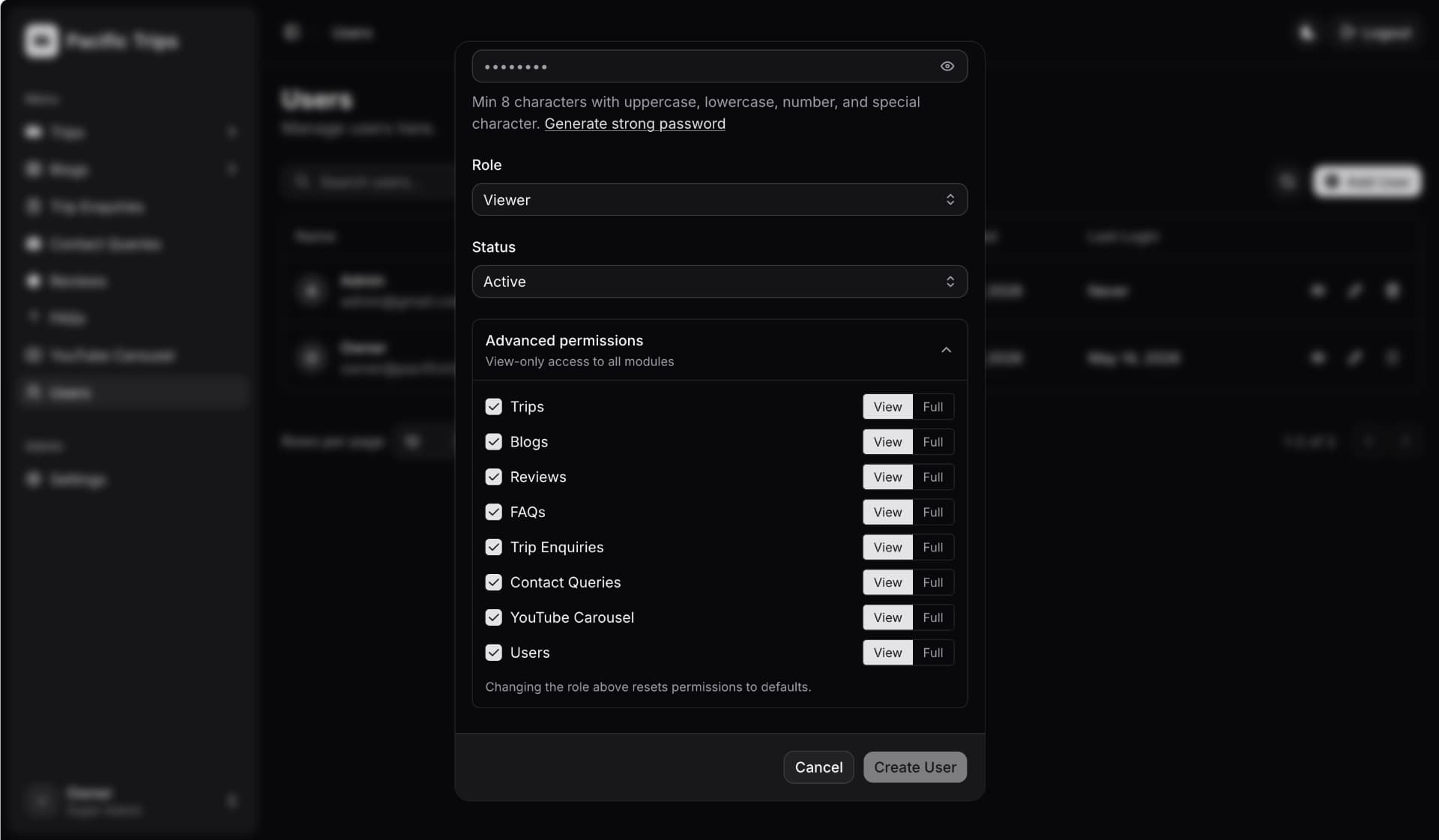
Three roles (super admin, admin, viewer) with per-module permissions across 8 sections. Permissions are cached for 5 minutes to avoid redundant DB hits.
- Bulk operations
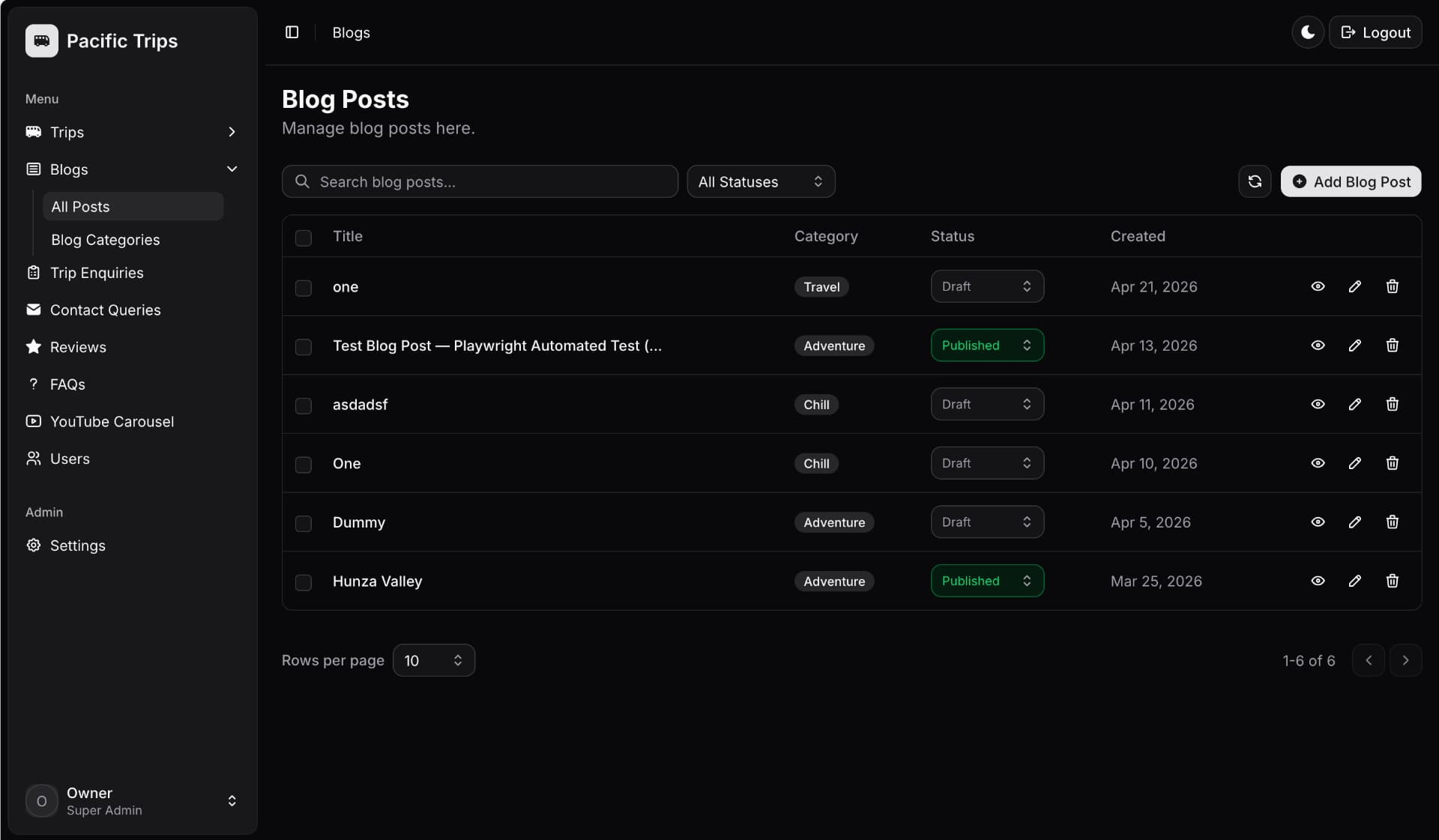
Batch delete and status updates across trips, blogs, enquiries, contact queries, and more — all powered by TanStack Table with pagination and search.
- Contact form with spam protection
Public-facing contact form validates each submission against Cloudflare Turnstile before touching the database. Clean submissions are inserted into Supabase; spam is dropped before insert.
- Email notifications via Resend
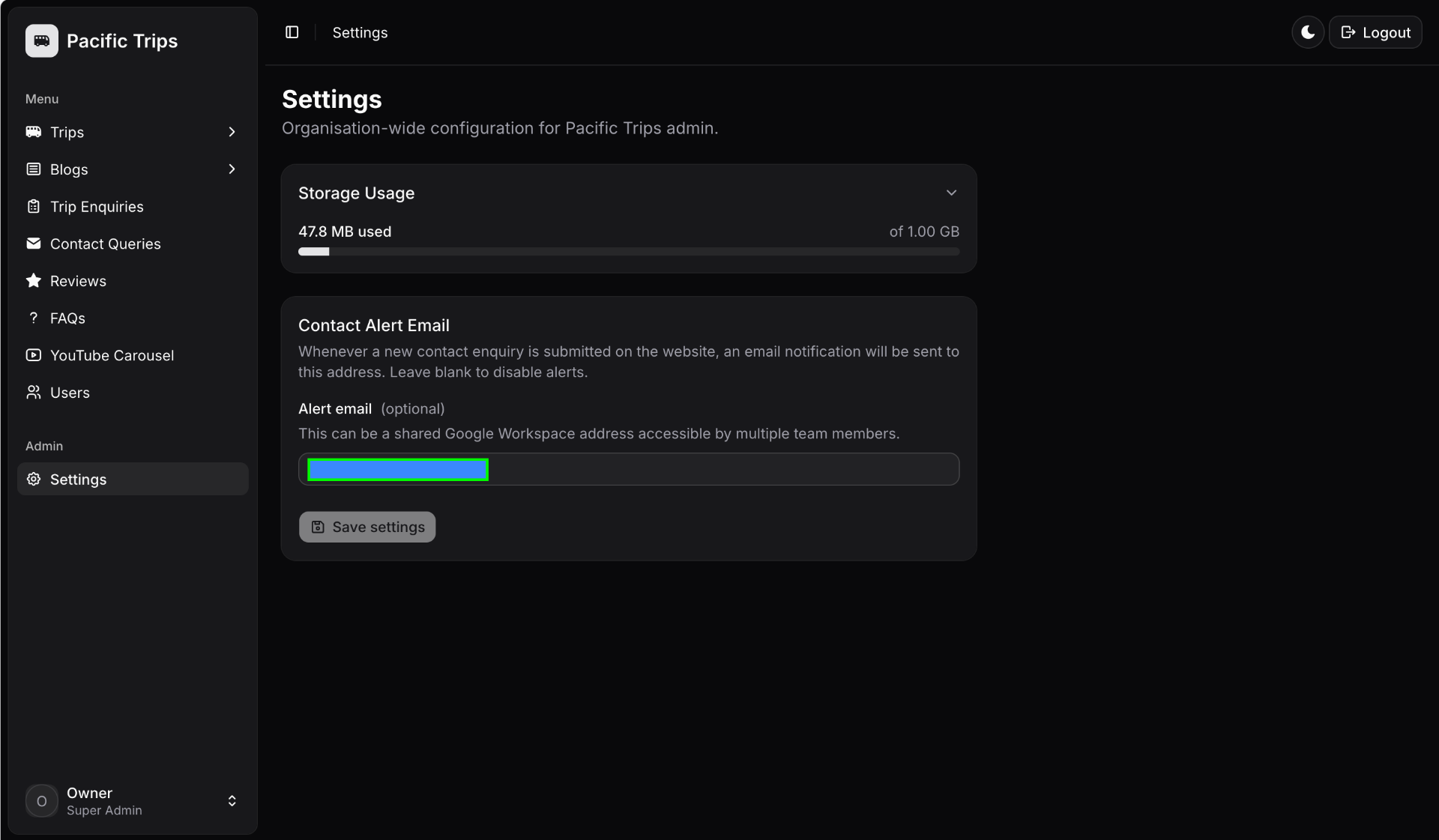
A Supabase Edge Function triggers on every new contact_messages row insertion and fires a transactional email through Resend — so the team gets notified the moment a lead comes in, without polling the dashboard
The result
The owner and team can now publish trip packages, blog posts, and respond to enquiries without any developer involvement. Role-based access means support staff only see what they need. Image uploads that used to require manual FTP now take seconds from the dashboard.